Bringing a new dog home is one of the most exciting decisions a family can make, and one of the most consequential ones for the dogs already living there. The way that first introduction goes sets the tone for the relationship that follows, and a poor start can create tension that takes months to work through. Done right, the process is straightforward, and the steps that make it go well are ones any owner can follow with a little preparation.
Meet on Neutral Ground
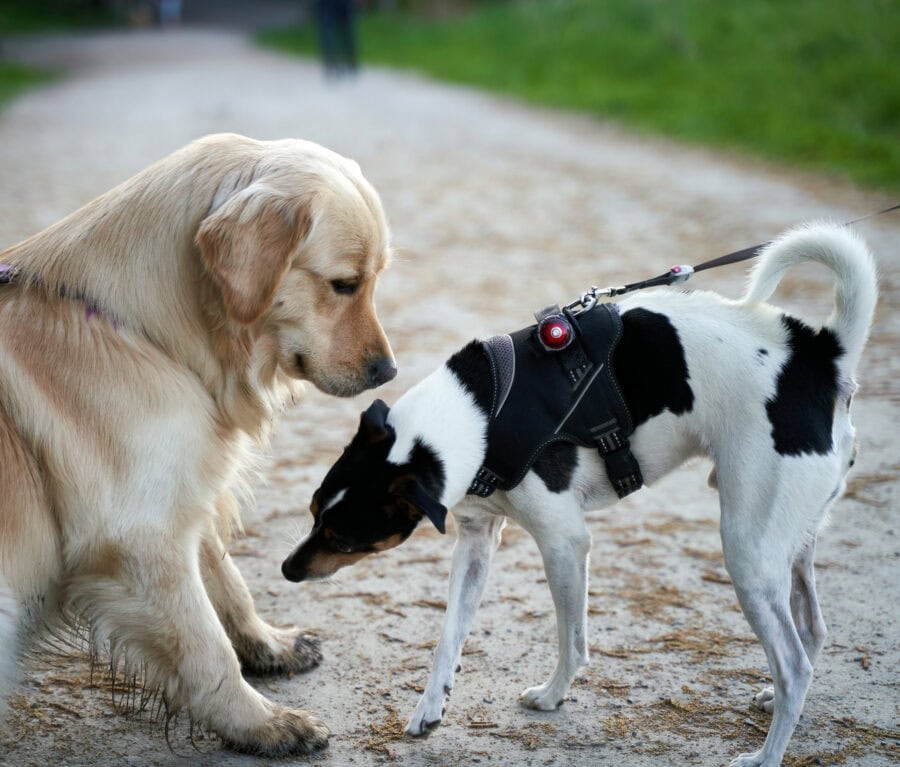
The first meeting between your current dog and the newly adopted dog should never happen in your home or your yard. To a resident dog, that space is already claimed, and asking it to welcome a stranger into its own territory puts it immediately on the defensive. A neutral location, such as a park or an open field that neither dog has been to before, removes that layer of pressure and gives both animals a fair starting point. The goal of the first meeting is not a dramatic, instant friendship. It is simply a calm, uneventful interaction that neither dog finds threatening.
This is also where handler preparation matters enormously. Each dog needs its own capable, attentive handler, meaning someone who can read the dog’s body language, keep the leash loose to avoid transmitting tension, and respond quickly if the dynamic starts to shift. Two dogs sharing one distracted handler is a setup that can go wrong fast, especially when one or both animals are still figuring out what the other one means. Keep the first few interactions brief and positive, and resist the urge to rush toward the friendly greeting before the dogs have had time to simply exist near each other without incident.
Introduce One Dog at a Time
If you have more than one dog at home, the temptation is to do the introductions all at once and get it over with. That approach dramatically increases the risk of a bad outcome. Pack dynamics add a layer of complexity that a newly adopted dog is not equipped to handle in those first moments, and a situation that might have stayed manageable between two dogs can escalate quickly when a third or fourth animal is factoring into the equation. Pack mentality is real, and a tense moment that might have passed without incident between two dogs can turn into something more serious when others join in.
Introduce each resident dog separately, in the same neutral setting, before anyone comes home together. This gives the new dog a chance to read each individual animal without the added noise of the group, and it gives each resident dog a chance to respond to the newcomer without the influence of its housemates. It takes more time and coordination, but the investment at this stage protects the relationships being built in those first days. A foundation built on individual, calm introductions is far more stable than one built on a single chaotic group meeting that went mostly okay.
Manage the Home Environment Early
Once the introductions have gone well enough to bring everyone inside together, the work is not finished. The home environment needs to be managed thoughtfully in those first days and weeks, because resource guarding and territorial tension can surface even between dogs that seemed perfectly friendly outside. Food bowls, resting spots, and toys are all potential flashpoints, and removing those triggers during the adjustment period is a much better strategy than waiting to see if a problem develops.
Feeding the dogs in separate spaces, rotating supervised time together with time apart, and giving each dog its own place to decompress are all habits that reduce friction while trust is still being established. This is not a permanent arrangement, and most dogs settle into a workable social order within a few weeks when the introduction is managed well. The goal during this period is simply to avoid putting the dogs in situations where they feel they have to compete or defend, so that the positive associations between them have room to grow without interference.
What to Expect and When to Get Help
Even a well-managed introduction will have some bumpy moments. Growling, stiff body posture, or avoidance in those early days is often normal communication between dogs still working out their relationship, and responding with panic or heavy correction can make things worse. Learning to distinguish between normal social negotiation and genuine conflict is one of the most useful skills an owner can develop during this period. A dog that growls once and then disengages is usually doing exactly what it should. A situation that escalates despite calm handling is a different matter.
If the introductions are not going smoothly, or if tension between the dogs is not improving after the first couple of weeks, that is a reasonable time to bring in professional support rather than letting the situation continue to build. Early intervention is almost always easier than working through a problem that has been allowed to develop for months. Getting the start right matters, and there is no reason to navigate that process alone when experienced guidance is available.
Ready to Set Your Dogs Up for Success
Introducing a new dog into a home with existing pets is one of the situations where good preparation and the right guidance make the biggest difference. If you want support navigating the introduction process or building the kind of structure that helps all of your dogs thrive together, Kasten’s Dog Training is here to help. Explore the full range of dog training programs available for dogs of every age and temperament, or reach out to the team directly to schedule an evaluation and start building a household where every dog feels settled and secure.