
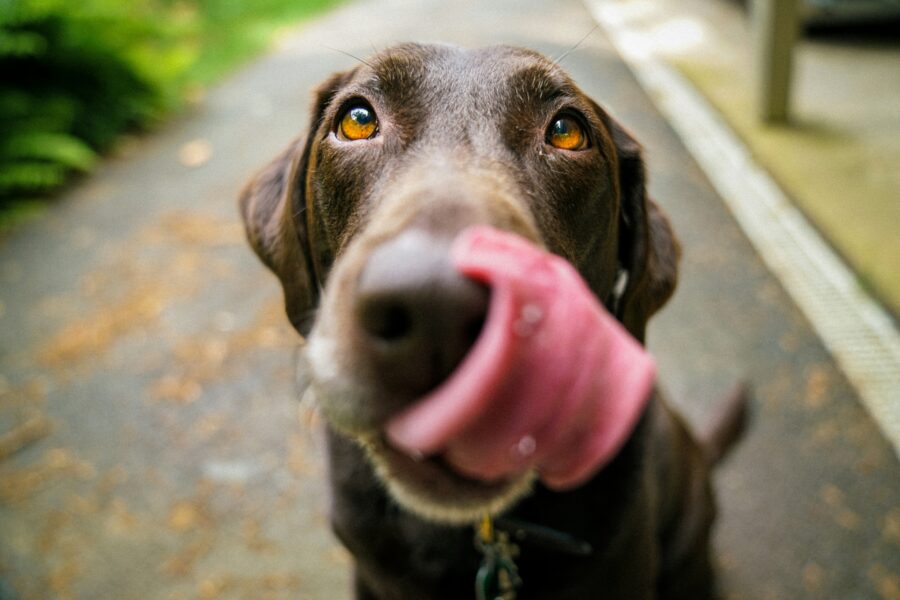
“Why do dogs lick so much?” If you’ve ever wondered, you’re not alone. Licking is one of the most common dog behaviors, and it can mean many different things.
So Why Do They Lick?
Dogs lick to show affection, communicate, explore their environment, or even to calm themselves. While occasional licking is normal, excessive licking in dogs may point to an underlying behavioral or medical issue. This guide explores the most common reasons behind dog licking behavior and when it may be time to seek professional help.
Behavioral Reasons Why Dogs Lick
In most cases, licking is a behavioral habit rather than a medical concern. Dogs may lick themselves, furniture, other surfaces, or their owners.
Common behavioral reasons include:
- Self-soothing – Similar to how repetitive actions calm people, licking can comfort dogs.
- Affection – A “hello lick” is often a sign of love.
- Habit – Once established, licking can become routine.
- “Grooming” lick – Usually after sniffing your skin for a few moments.
- Exploration – Puppies use their tongues to investigate new things.
- Taste – Dogs may enjoy the salty taste of human skin.
- “Please Stop” lick – Falls within the context of being touched in a way a dog might find aversive; may be asking you politely to stop touching them.
How to Manage Behavioral Licking
If your dog’s licking leads to hot spots, hair loss, or skin irritation:
- Redirect their focus with toys, chews, or interactive games.
- Provide mental stimulation through training or puzzle feeders.
- Use positive reinforcement. Reward your dog when they stop licking on command (e.g., “Leave it”).
Medical Reasons for Excessive Licking in Dogs
While less common, excessive licking can also signal an underlying medical issue. If your dog suddenly starts licking more than usual, or if the behavior is paired with skin changes, consult your veterinarian.
Possible medical causes include:
- Allergies – Itchy skin or paws often lead to persistent licking.
- Infections – Bacterial, fungal, or parasitic infections can cause irritation.
- Pain – Dogs may lick sore joints or injuries, much like humans rub an aching muscle.
- Gastrointestinal issues – Some dogs lick unusual surfaces when experiencing nausea or stomach discomfort.
When to Seek Professional Help
If you notice excessive licking in dogs that results in skin damage, or if the behavior seems sudden and unusual, it’s best to consult a veterinarian. A professional can determine whether the cause is behavioral, medical, or a combination of both.
Final Thoughts
So, why do dogs lick? The answer depends on context. Occasional licking is usually harmless and even affectionate. But when licking becomes excessive, compulsive, or damaging, it’s time to take action. For behavioral licking, focus on redirection, enrichment, and training. For medical concerns, seek veterinary guidance. By understanding dog licking behavior, you can better support your pet’s health, happiness, and overall well-being.
Contact Us!
At Kasten’s Dog Training, we remain committed to helping you and your dog build a strong, positive relationship through practical training. Visit our website or contact us today to learn more about our services so we can assist you in reaching your training goals!