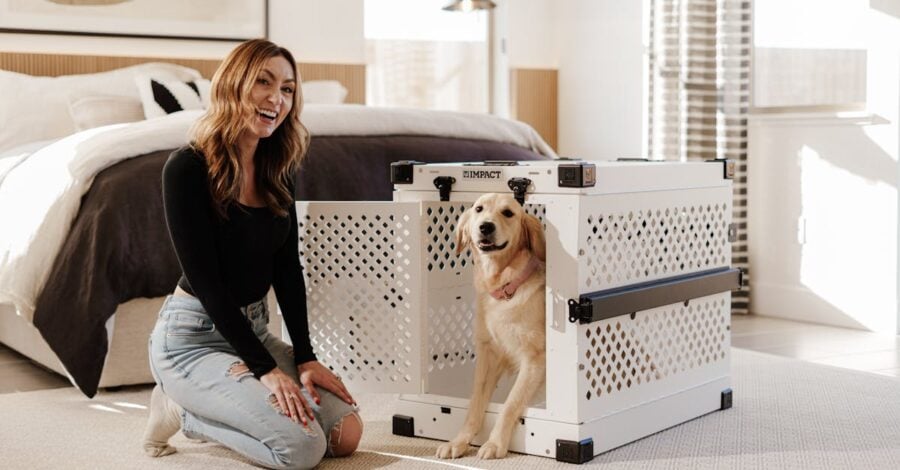
Crate training your dog provides security, aids in house-training, and prevents destructive behavior. For success, the crate must be a secure, comfortable den, not a jail. Today, Kylee, our puppy specialist and dog trainer at Kasten’s with over a decade of canine experience, shares three essential tips on crate training your pup.
Make the Crate Inviting
- Comfort and Toys: Line the crate with safe bedding and durable toys. Offer high-value, long-lasting enrichment chews (like stuffed Kongs) exclusively inside the crate. (A word of caution, if you dog is unsupervised, be careful not to leave them with treats that could break off and become choking hazards.
- Meal Association: Feed all meals inside the crate, gradually moving the bowl to the back. Gently close the door during the meal, opening it immediately after your pup has finished eating and when you dog is calm.
- Treat Discovery: Toss high-value treats into the crate when the puppy isn’t looking to reinforce positive feelings.
- Play and Cuddle: Wherever the crate is located, spend time playing and cuddling near it. Throw toys in the crate so puppy can enter and leave with low pressure and fun.
Introduce the Crate Slowly and Without Stress
- Avoid Punishment: Never use the crate as a penalty; this creates fear.
- Systematic Training: Use lures (treats/toys) to encourage entry. Start with the door open, then close it for just 1 to 5 seconds. Gradually increase the duration.
- Ignore Whining: Wait for a moment of silence before opening the door. We want calmness (a moment of settling) when we open the door.
- Practice Separation: Start by staying nearby – follow the no look, no talk, no touch rule. Then briefly step out of sight. Keep returns and releases calm. Use a calm, slow voice.
Establish a Predictable and Consistent Routine
- House-Training Aid: The crate is invaluable when properly used, because dogs instinctively avoid soiling their sleeping area.
- Immediate Potty Breaks: Always take the puppy out immediately before crating and immediately after releasing them.
- Calm Exit: Only open the door once the puppy is calm and settles to reinforce relaxation.
- Stay Consistent: Don’t let puppy sleep with you in bed as it can cause backsliding.
Seek Professional Help for Crate Training Your Dog
Call a professional dog trainer or behavior specialist if crate training is disrupting your health, your pup demonstrates excessive separation anxiety, or crate training simply is not progressing for you.
Contact Us!
At Kasten’s Dog Training, we remain committed to helping you and your dog build a strong, positive relationship through practical training. Visit our website or contact us today to learn more about our services so we can assist you in reaching your training goals!