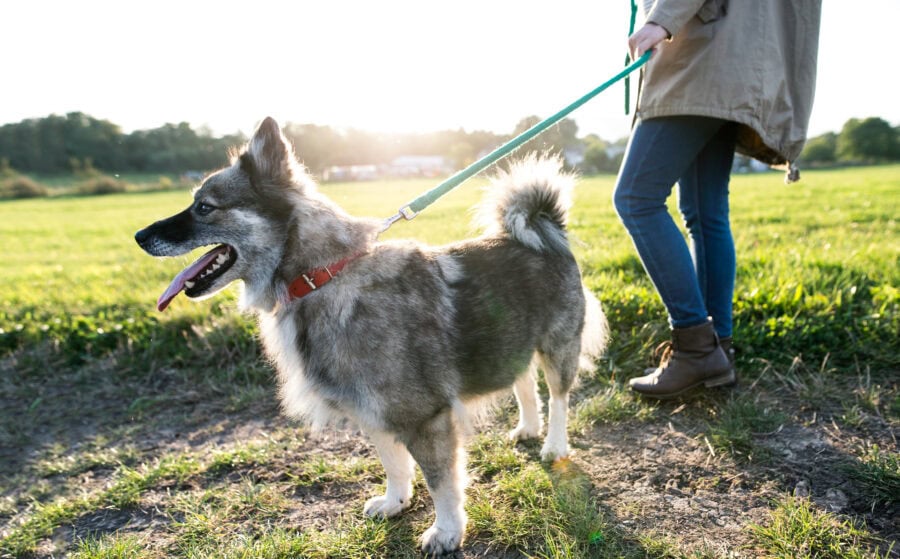
Dogs do not experience leadership the way humans do, and that gap in understanding is at the root of many training struggles. Many owners step into the role of leader with human instincts, offering negotiation, repeated asking, and occasional exceptions, only to find their dog growing more uncertain rather than more cooperative. What dogs actually need from a leader is something much simpler and far more consistent than most people expect.
Leadership Is Not About Dominance
For decades, dog training culture was heavily influenced by the idea that dogs are constantly vying for social status and that owners need to assert dominance to keep them in line. That framework has largely been set aside as research into dog behavior has developed. Dogs are not plotting to overthrow their owners, and behaviors like pulling on the leash, ignoring commands, or pushing through doorways are not power grabs. They are simply behaviors that have worked before and therefore continue to work.
What dogs actually respond to is clear, predictable guidance from someone they trust. Leadership in the dog’s world means being the person who sets expectations, follows through on them consistently, and makes the environment feel safe and understandable. A calm, attentive, and responsive dog is not one that has been dominated into submission. It is a dog that has been given a reliable structure and knows exactly what to expect from the person on the other end of the leash.
What Dogs Are Actually Looking For
Dogs are deeply social animals. They are remarkably attuned to human behavior and highly motivated to operate within a clear social structure. When that structure is present, dogs tend to be calm, confident, and focused. When it is absent, they default to filling the gap themselves, which usually looks like anxiety, reactivity, or testing boundaries in search of a signal about where the limits are.
A dog that appears to be misbehaving is very often a dog that is trying to get information. Every time a boundary is crossed without a consistent response, the dog logs that as data. Every time a command is given and not followed through, the dog learns that following through is optional. This is not stubbornness or a dominance display. It is a rational animal doing exactly what any animal does when the rules of its environment are unclear: it keeps experimenting until a pattern emerges.
How Calm Energy Shapes a Dog’s Behavior
One of the most practical things a dog owner can understand is that dogs read emotional states with remarkable sensitivity. A handler who is tense, frustrated, or uncertain communicates that state directly to the dog through their body, their movements, and the quality of their attention. A dog already in a heightened emotional state mirrors back the energy it receives, which is why anxious or reactive dogs often get worse when their owners respond with their own anxiety or frustration.
Calm, grounded leadership sends a different message entirely. When an owner moves with purpose, gives clear signals without repeating them endlessly, and remains steady in the face of the dog’s excitement or pushback, the dog has something to orient around. That steadiness is not something that has to be faked or performed. It develops naturally as training builds the owner’s confidence and gives them reliable tools for communicating clearly. A calm handler is almost always the product of knowing what to do and having practiced it enough to trust it.
The Difference Between Authority and Affection
A common worry among dog owners is that becoming more structured or more consistent will somehow damage the relationship with their dog. This concern usually shows up as a reluctance to enforce rules, a tendency to let certain behaviors slide out of love, or a belief that kindness and structure are in tension with each other. In reality, the opposite is true. Structure and affection are not competing values in a dog’s experience. They are both necessary ingredients for a relationship that actually works.
Dogs do not experience consistent boundaries as coldness or rejection. They experience them as clarity, and clarity is one of the primary things that makes a dog feel secure. A dog that is firmly and kindly guided through an experience it finds challenging comes out of that experience with more trust in its handler, not less. The goal of good leadership is never to suppress a dog’s personality or make it fearful. It is to give the dog a framework within which it can relax, be itself, and genuinely thrive.
Putting Leadership Into Practice Every Day
Leadership is not something that happens only during formal training sessions. It shows up in how you manage every interaction across the course of a day. Whether it is waiting for calm behavior before putting down a food bowl, requiring the dog to sit before going through a door, or responding the same way every time a certain behavior comes up, the accumulation of consistent small moments is what actually shapes how a dog understands its relationship with you.
This does not mean every moment has to be a training exercise. It means developing habits that communicate predictability and follow-through without requiring constant effort. Dogs that are managed with this kind of steady, everyday consistency tend to carry that calm with them into new environments and unfamiliar situations. They have been taught not just what to do, but that the person guiding them can be relied on to mean what they say, and that reliability is ultimately what leadership means to a dog.
Contact Us!
At Kasten’s Dog Training, we remain committed to helping you and your dog build a strong, positive relationship through practical training. Contact us today to learn more about our services so we can assist you in reaching your training goals!