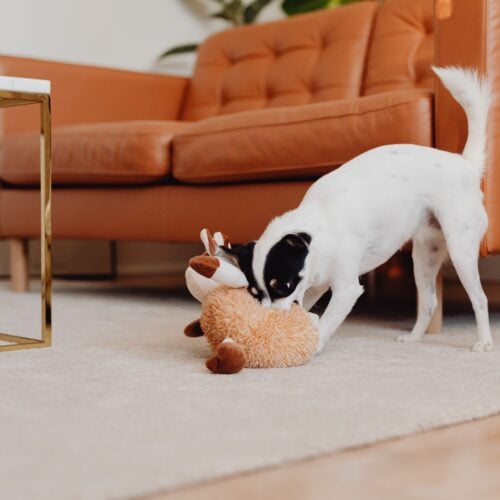

Bringing a new dog home is exciting at all times of the year, but the holidays can make that first week feel even busier. Between visiting family, travel plans, extra decorations around the house, and changes in routine, a new dog may be adjusting to more than just a new house. Here are some tips for making the transition easier for you and your new furry friend!
What to Have Ready Before They Arrive
Before bringing a new dog home, you’ll want to have a few things set in place, like where they will eat, where they will sleep, how they will go outside, and where they will spend time when you can’t supervise them. Having these basics figured out before your new dog is running around makes the transition easier for everyone.
As for supplies, you don’t need to fill your house to the brim with toys and dog products. Focus on the essentials: food, bowls, a good collar and leash, a crate or other safe resting area, a few appropriate toys, and any supplies recommended by the breeder, shelter, or vet.
This is also a good time to look around your house from the dog’s perspective. Put medications, food, trash, electrical cords, and anything else that could be a temptingly dangerous toy out of reach.
Keep the Arrival Simple
Because you and your family are so excited, it can be tempting to make a big deal about your new pet’s arrival. However, most dogs benefit from a quieter introduction.
Start by showing your dog the area where you want them to go to the bathroom, like your backyard or a patch of grass near your home. Let them sniff around outside before taking them indoors. Once inside, let them gradually explore the home rather than giving them immediate access to every room. This makes supervising them easier on you and keeps them from getting too overwhelmed. The goal of day one is to start getting your new friend used to their home and building trust.
The First Few Nights
The first few nights of having a new pet can feel like you actually brought home a new baby. Puppies may cry or bark because they are suddenly sleeping away from their littermates, and adult dogs may be unsettled because of the unfamiliar environment.
Decide where your dog will sleep and try to be consistent. A crate provides a clear, safe sleeping space while also helping with housebreaking and supervision. For a puppy, nighttime bathroom trips will be pretty frequent for a few weeks.
You will probably have a few interrupted nights at first, and that’s normal. What is most important is to establish the routine you want your dog to follow long term.
Establish Rules and Routines Early
Some owners feel like they should give a new dog a few days to settle in before introducing rules, but this can actually make it more challenging for your dog to learn. Implementing structure early can make their new environment easier to understand and prevent confusion later on.
Begin by establishing regular times for meals, bathroom breaks, walks, play, rest, and bedtime. You don’t need a schedule that tracks every minute, but giving your dog a predictable rhythm can help them understand what to expect.
Enforcing household rules should also start early. If you don’t want your dog to jump when they see people, don’t allow it during the first week just because everyone is excited. If certain rooms are off limits, teach that boundary right from the start. Changing the rules later is usually harder than teaching them clearly from the beginning.
When Should You Start Training a New Dog?
Training can (and probably should) start as soon as your dog comes home. This doesn’t mean scheduling long obedience sessions on the first day, but teaching your dog their name and routine are part of training. Every interaction teaches your dog something about you, their home, or what is expected of them.
If a puppy jumps and gets attention, they learn that jumping works. If pulling on the leash lets them get where they want to go, they learn that pulling works. On the other hand, rewarding calm behavior and guiding them toward behaviors you want helps build better habits from the get-go.
Give Your New Dog a Strong Start
The first week with a new dog won’t go perfectly, but it will give you and your new pup time to learn and build a relationship. Focus on introducing routines and setting clear expectations while giving your dog time to adjust to their environment.
If you need help getting started, Kasten’s Dog Training can help you choose a training program that fits your dog’s age, personality, and needs.