
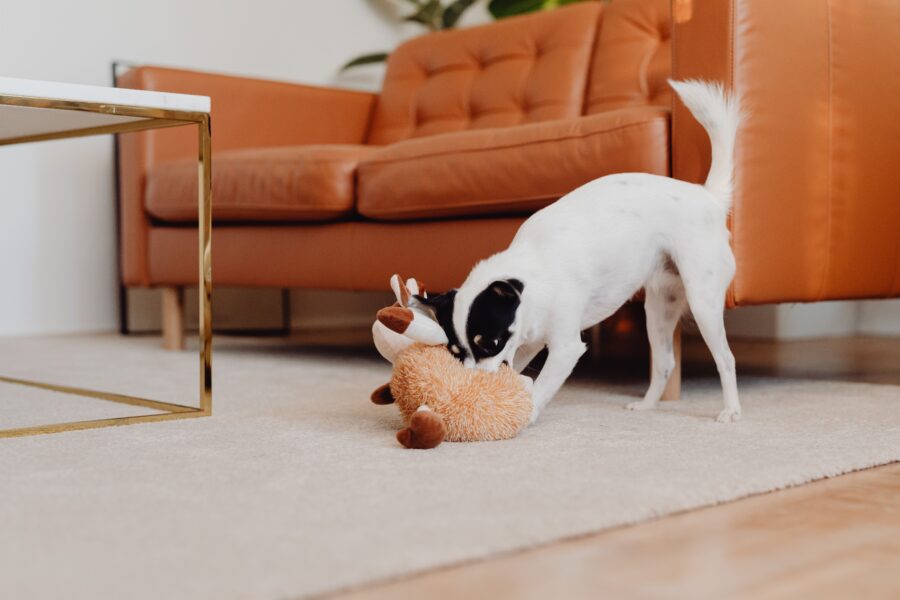
The best indoor activities for dogs combine purposeful movement, simple problem-solving, and short training sessions throughout the day. That approach is especially useful in the fall, when wet weather and earlier sunsets often cut outdoor time short. A hallway, living room, or basement still gives your dog plenty of opportunities to move, think, and interact with you. The goal is not to recreate a long walk indoors. It is to give your dog productive ways to use physical and mental energy when outside time is limited.
Why Dogs Get Restless When Outdoor Time Drops
When your routine changes, your dog notices. Shorter walks and less yard time mean fewer chances to move, sniff, explore, and interact. Restlessness, pacing, barking, or looking for something to get into may signal that your dog needs more activity or engagement. Kasten’s guide to structure and mental stimulation offers practical ways to build more consistency into the day.
Think about what disappeared from your dog’s normal routine. If a wet yard keeps everyone inside or darkness cuts the evening walk short, add movement indoors. If your dog has spent most of the afternoon sleeping, add training or scent work before dinner. For puzzle feeders, interactive toys, and other general enrichment ideas, see Kasten’s article on mental stimulation for dogs.
Indoor Activities for Dogs That Work Off Energy
Start with games that make your dog move with a purpose. Play hallway fetch with a soft toy, practice recalls between two people, or create a simple obstacle course with chairs and cushions. Tug works well when you add rules, such as asking for a sit before play begins and a drop when the game pauses. These activities give your dog a productive way to burn energy without requiring a large space.
You can also turn ordinary movement into a challenge. Ask your dog to follow you from room to room, stop at a place mat, sit, wait, then move again. Hide a favorite toy and encourage a search. Structured activity works even in a smaller home. Kasten’s advice for living with a high-energy dog in an apartment offers more ideas for keeping active dogs engaged when space is limited.
Enrichment Activities That Tire the Brain
Mental enrichment for dogs does not have to be complicated. Hide a few pieces of kibble around one room, place a toy under one of several cups, or practice familiar commands in a different part of the house. You might also teach a new trick in small steps. The challenge comes from asking your dog to pay attention, make a choice, and respond to you.
Training fits naturally into indoor enrichment for the same reason. Keep the session focused, then move on before you fall into repeating the same command over and over. If your dog seems distracted, think about whether the command is clear in that setting before assuming stubbornness. Kasten’s article on why dogs do not always listen explains how distractions, consistency, and understanding affect a dog’s response.
How Much Mental Stimulation Does a Dog Need Each Day?
There is no universal number of minutes that fits every dog. Age, health, energy level, training history, and the rest of the daily routine all matter. A young, high-energy dog often needs more opportunities to work and engage than an older dog that settles easily.
Watch your dog instead of the clock. If your dog engages with the activity, responds to you, and settles afterward, the session is doing its job. If restlessness continues or your dog keeps finding inappropriate ways to stay busy, add another constructive activity and pay attention to the response.
When a Structured Program Makes a Real Difference
Home activities are useful, but sometimes the bigger issue is a lack of structure or training. A dog that struggles to settle, respond reliably, or move from excitement back to calm may benefit from professional guidance. Kasten’s training programs build obedience and communication skills that owners can continue using in everyday situations at home.
Chewing, barking, pacing, jumping, and other difficult behaviors sometimes appear alongside boredom, but they can also have other causes. If those behaviors are persistent, escalating, or hard to manage, another indoor game may not address the real problem. Kasten’s offers behavior modification programs for adult dogs with more significant behavioral concerns, with an evaluation used to help determine the appropriate training path.
FAQ
What Are Good Indoor Games for Dogs?
Good indoor games include hallway fetch, tug with rules, hide-and-seek, recalls, simple obstacle courses, and toy searches. Choose activities that fit your dog’s size, energy level, and the amount of safe space available.
How Do I Stop My Dog From Getting Bored Inside?
Use several kinds of engagement instead of relying on one long activity. A mix of movement, scent work, training, play, and settled downtime gives your dog different ways to stay occupied throughout the day.
Can Indoor Training Count as Enrichment?
Training asks your dog to focus, respond, and work through a task, making it a useful form of mental enrichment. Familiar commands become more challenging when you practice them in a different room or add appropriate distractions.
Keep Indoor Days Productive With Kasten’s Dog Training
Kasten’s Dog Training helps owners build clearer communication, better structure, and practical obedience that carries into daily life. Those skills make ordinary time at home more productive for both you and your dog. Contact Kasten’s Dog Training to discuss your goals and find the right next step.